Setting the record straight.
Glendale Power Needs and Costs Fact Sheet

Some Glendale City Council candidates are advocating for running the gas-burning engines at the Grayson Power Center at a higher duty cycle (more hours per year). They claim that Glendale can sell this excess fossil fuel energy to neighboring cities in order to lower our utility rates—an ill-conceived and dangerous idea.
Despite their claims, this policy would:
1. NOT provide salable power and therefore NOT lower utility rates.
- Glendale will be using it: Other cities will only want to buy power at peak times (hot summer afternoons/evenings), when Glendale will already be using it.
- At non-peak times, other utilities won’t want it: For demand outside of peak times, utilities want to buy clean energy. They pay a premium for clean energy credits, but very little for dirty gas energy.
- On top of that, GWP can’t sell it: Grayson does not now have access to the same-day and day-ahead markets, which are the main mechanism for selling power. Despite claims some candidates are making about being able to sell power now, the wholesale markets are drying up, requiring GWP to be on the exchanges (WEIM [Western Energy Imbalance Market] and EDAM [Extended Day Ahead Market) to sell efficiently. Glendale is not currently in either of these exchanges and it is likely to take a year or two to get on them.
2. NOT increase peak power (the maximum amount of power Grayson can produce at any moment)
- When the city needs to run all gas units at Grayson longer due to need (high heat days), it already can — and at 100% capacity.
3. Increase local and regional air pollution
- Especially the Pelanconi, Riverside Rancho and Grand Central neighborhoods that are within one mile of the Grayson gas engines, are already in the 100th percentile for Pollution Burden and are home to tens of thousands of residents and several local child care centers and elementary schools.
4. Increase health risks, such as cancer and asthma
5. Require Glendale to spend money on more expensive emission reduction credits
- Glendale will already need to buy expensive emission (pollution) reduction credits for both nitrous oxides and volatile organics for the current 14% duty cycle.
6. Require a permit (and therefore even more costs)
- Glendale would have to get a permit from the South Coast Air Quality Management District (SCAQMD).
6. Glendale does not need to produce more fossil fuel energy.
- Glendale has plenty of power (imported power + Grayson Unit 9 + some local solar) most of the time. Much of the imported power is renewable and/or carbon-free.
- 3 new gas Internal Combustion Engines (ICE) and a new carbon-free 75 MW (300 MWh) battery are replacing obsolete, polluting equipment and will both provide peak power for hot summer afternoons and early evenings. GWP is working to get both assets online by this summer (2026) and continues to make progress on utility-owned local solar for local clean energy and resilience.
- The Grayson repowering and current 14% duty cycle will already provide peak power for when demand is at its highest. Grayson can be operated more than 14% on a given day if demand requires it. It just can’t average more than 14% duty cycle over the course of a year (1120 hours).
- In addition, Unit 9 (the existing and largest gas unit) has been refurbished and is being operated when needed, without limitations.
- GWP’s ICE engines are awaiting permits and completion of installation to begin usage, and the zero-emission 75 MW Battery Energy System is being installed.
- The battery will be charged with local solar and/or lower cost off-peak energy.
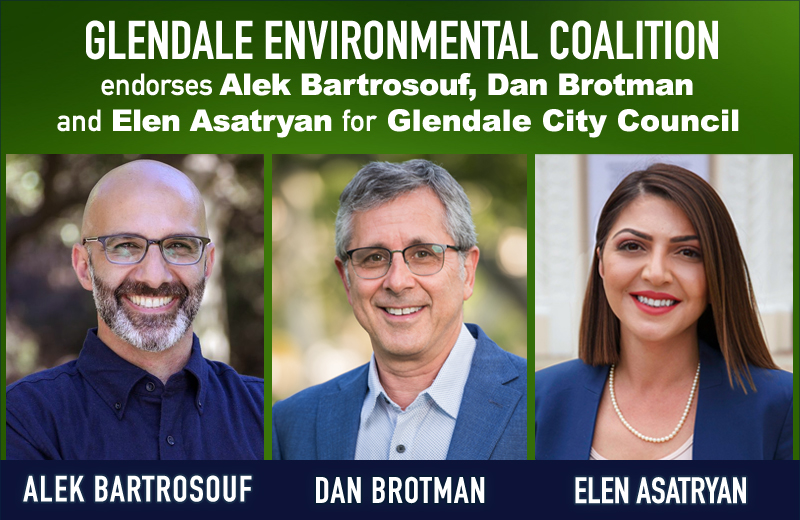
Vote for Dan Brotman, Alek Bartrosouf & Elen Asatryan
Candidates who will work to PREVENT pollution & climate impacts!