Due to extreme heat dangers, GEC asks for new real grass, not plastic grass, for “Field Three” revamp at the Sports Complex. GEC asks City Council to reject proposed artificial turf project on Tuesday, October 6, 2026 at 6pm.
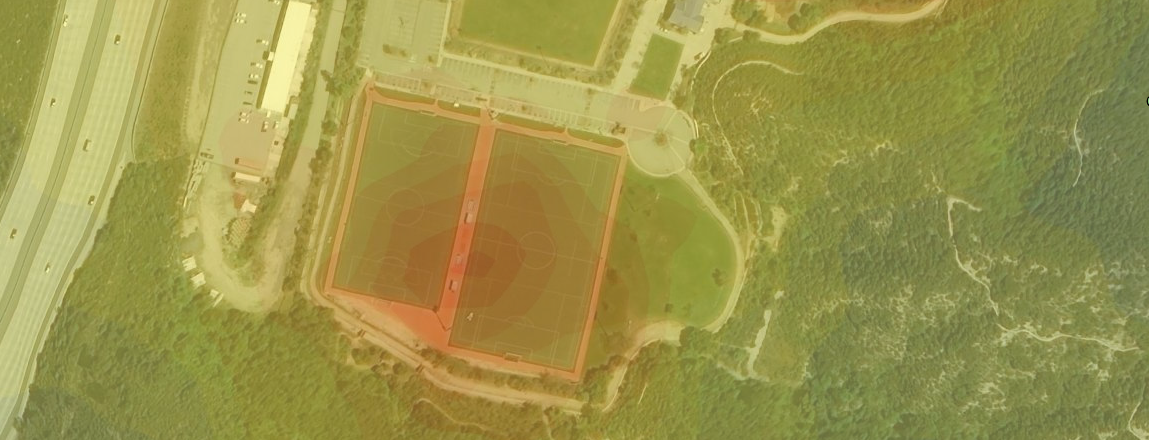
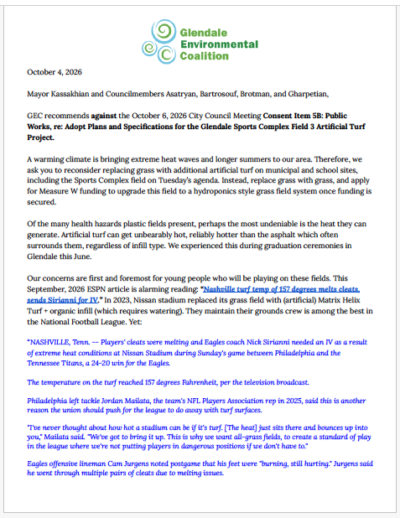
GEC asks Glendale City Councilmembers for their reconsideration of Consent Item 5B: Public Works, re: Adopt Plans and Specifications for the Glendale Sports Complex Field 3 Artificial Turf Project on this Tuesday’s agenda.
A warming climate is bringing extreme heat waves and longer summers to our area. This is the coolest decade we will ever know. In response, we ask Council to consider pivoting on their decision to replace grass with additional artificial (plastic) grass fields on municipal and school sites in Glendale, including at the Sports Complex field under consideration on Tuesday’s agenda.
We ask that Council instead direct staff to replace grass with grass now, and apply for Measure W funding to upgrade Sports Complex Field Three to a hydroponics style grass field system once funding is secured.
Of the many, very real health hazards plastic fields present, perhaps the most undeniable is the extraordinary heat they can generate. Artificial turf can get unbearably hot. They can be lethal. These fields are reliably hotter than the asphalt which often surrounds them, regardless of infill type. If you have ever had to sit on a plastic grass field during a June graduation ceremony in Glendale, you understand the heat they generate.
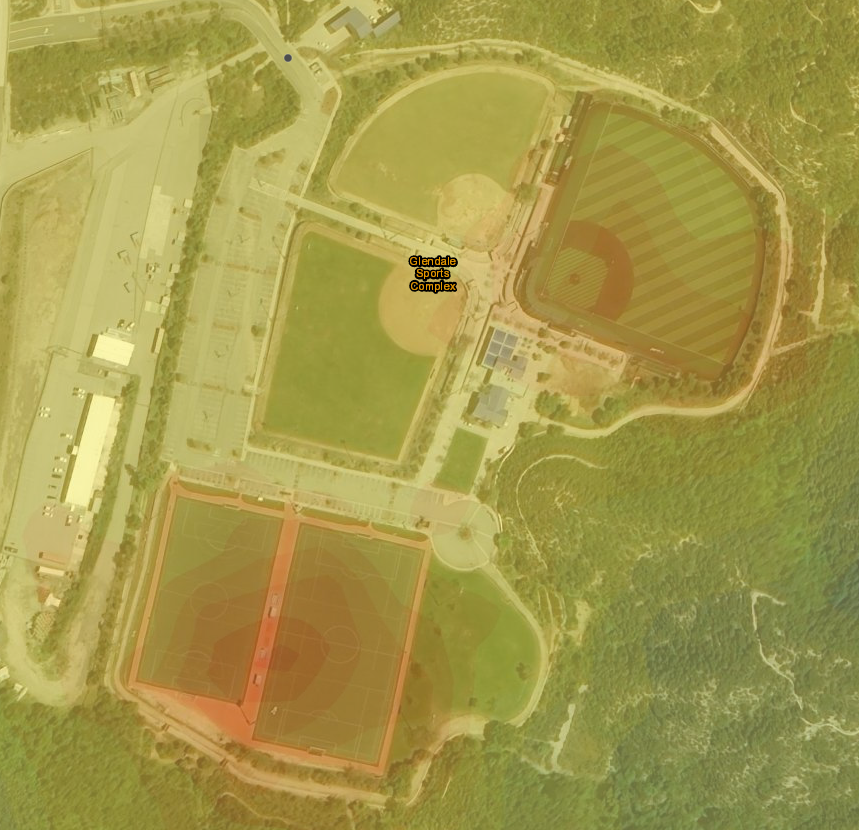
Our concerns are first and foremost for the young people that will be playing on these fields. The Los Angeles Unified Board of Education took bold and unanimous action in 2025 to confront the frequency and severity of extreme heat by banning new artificial turf installations at all K-6 and middle schools. Let’s build on this precedent. Consider that according to the U.S. Centers for Disease Control and Prevention, heat-related illnesses are a leading cause of death or disability among high school and college athletes.
This September, 2026 ESPN article “Nashville turf temp of 157 degrees melts cleats, sends Sirianni for IV” is an alarming read. In 2023, Nissan stadium replaced its grass field with (artificial) Matrix Helix Turf + organic infill (which requires watering). They maintain their grounds crew is among the best in the National Football League. AND YET:
“NASHVILLE, Tenn. — Players’ cleats were melting and Eagles coach Nick Sirianni needed an IV as a result of extreme heat conditions at Nissan Stadium during Sunday’s game between Philadelphia and the Tennessee Titans, a 24-20 win for the Eagles.
The temperature on the turf reached 157 degrees Fahrenheit, per the television broadcast.
Philadelphia left tackle Jordan Mailata, the team’s NFL Players Association rep in 2025, said this is another reason the union should push for the league to do away with turf surfaces.
“I’ve never thought about how hot a stadium can be if it’s turf. [The heat] just sits there and bounces up into you,” Mailata said. “We’ve got to bring it up. This is why we want all-grass fields, to create a standard of play in the league where we’re not putting players in dangerous positions if we don’t have to.”
Eagles offensive lineman Cam Jurgens noted postgame that his feet were “burning, still hurting.” Jurgens said he went through multiple pairs of cleats due to melting issues.
“Halftime was like a NASCAR pit crew helping me get ready for the second half,” he said. “That turf was just radiating.”
The temperature in Nashville for Sunday’s kickoff at noon local time was 95 degrees, with a heat index of around 105. A heat dome had settled over the area in recent weeks, with high pressure in the atmosphere pushing heat toward the surface and trapping it there.
Titans safety Amani Hooker said the midsoles of his cleats “melted completely off” during the season opener against the visiting New York Jets.
Mailata said he twice rolled his ankles in Sunday’s contest and wondered if it could be the result of his shoes bending because the plastic in the bottom of his cleats got soft.
Television cameras showed a member of the Titans having his cleats sprayed with water to cool them off.
“It was hot as s—,” Sirianni said. “I didn’t play a snap and I had to get an IV. I so appreciate how much the guys prepared. I so appreciate how much they fought through because it wasn’t easy.”
Full Article: https://www.espn.com/nfl/story/_/id/49995389/turf-temps-157-f-nashville-melts-cleats
Alternate Pathway:
We ask City Coucil to consider direct staff to plan for a revamped grass field now, and apply for Measure W funding to upgrade it to a Permavoid, EPIC or other hydroponics style system in the future. Hydroponics-style systems using natural grass are much cooler and far less polluting. This type of mitigation aligns with Glendale’s Climate Action and Adaptation Plan.
Our local Measure W liaison indicated that this is a viable grant request as this system collects and uses stormwater and acts as a filter to keep toxins, PFAS and microplastics out of the environment.
Read our full letter exploring natural grass options below:
– – – – – – – – – – – – – – – – – – – –
Now it’s your turn!
Please ask City Council to pause this artificial turf plan (Consent Item 5B), take into account the clear and present dangers of heat in their decision making, and move to replace this grass field with a re-vamped grass field. This field is used by baseball, softball and soccer players.
Email: CityCouncil@GlendaleCA.gov by end of day Monday, October 4
Email will reach: Mayor Kassakhian, Councilmember Asatryan, Councilmember Brotman, Councilmember Bartrosouf and Councilmember Gharpetian
Forward your email to us at contact@gec.eco if you would like to share what you wrote!
Call/Speak Live: Tuesday, October 5 (meeting begins 6 pm)
Instructions here: https://www.youtube.com/watch?v=a_Iv-efjqOU
View the Live Stream to follow along: https://www.youtube.com/myglendale
Call in with your comment: (818) 937-8100 or via zoom (Meeting ID 165 927 8910)
Agenda/Comment Instructions: https://glendaleca.primegov.com/Portal/Meeting?meetingTemplateId=42099
– – – – – – – – – – – – – – – – – – – –
Dangers of Artificial Turf (Plastic Grass)
- 40-70 degrees hotter than surrounding air temperatures on warm, sunny days. It can get superheated to temperatures from 120 to 180 degrees F. and melt shoes, blister hands and feet, and induce dehydration and heatstroke.
- Made from virgin plastic with blades and infill (such as coconut coir) that have unknown additives.
- Contributes to the heat island effect and degradation of open space, increasing temperatures for the immediate area and surrounding areas.
Injuries, including turf burns, are a major concern. - At the end of their lifespans, these materials will be sent to landfills.
- Plastic grass is expensive and requires replacement every 7-10 years.
- Plastic grass, when cared for properly, does not save water as it requires multiple soakings per day during hot days to provide only about twenty minutes of cooling.
- Requires faster replacement without proper care, costing hundreds of thousands of dollars.
- Synthetic grass usually contains PFAS chemicals. According to the Environmental Protection Agency, PFAS chemicals are a known carcinogen which can interfere with hormones, reproduction, immunity and cause developmental delays in children. Despite industry claims of PFAS being removed from the plastic blades, this is not yet verifiable. (See: Report from Feb 2026 from Cal EPA:
- Concerns remain regarding migration of PFAS-laden microplastics as the blades break down into dust from sun exposure and friction and end up in the air, soil and water. They migrate into players’ bodies (though lungs, clothing, shoes) and into the environment, including via storm drains into waterways, such as the Verdugo Wash.
- Off Gassing: “…plastic grass carpet generates massive heat islands larger than their actual size. A regulation sized field is about 80k square feet, or 2 acres, comprising approximately 800,000,000 plastic blades per field. Both the field surface and the surface of each blade reflect heat, triggering visible waves of heat rising and spilling into adjoining areas like schools or spectator stands. The entire surface area of heated plastic constantly off-gasses both methane and ethylene. These greenhouse-gases are highly toxic chemicals that everyone on and near the field (children, athletes and bystanders) will constantly inhale. They are released in increasing volume as the blades break down from UV light, weather, age and grinding action during play. The off gassing continues even at night and will continue for the hundreds of years it takes for these materials to decompose. Choosing to install plastic synthetic turf is choosing to promote climate change.” – Safe Healthy Playing Fields
- For a much more detailed, comprehensive overview of the dangers of artificial turf to our community, we ask that you read this letter from Safe Healthy Playing Fields, which offers a huge amount of research into why leaders should reject artificial turf fields for five reasons: COST, TOXICITY, HEAT, INJURY and DISPOSAL
There are reasonable alternatives that use natural grass.
Additional Links:
Click here to see GEC and the Sierra Club, Verdugo Hills Group joint letter to Glendale City Council (June 5, 2022)
Click here for supporting reference links.to June 5, 2022 Letter
GEC’s Letter of Concern Re Artificial Grass Installations (February, 2021)
GEC’s Followup Response to Staff Report (April, 2021)
Commission Meeting (Video and Agenda)
Discover more from Glendale Environmental Coalition
Subscribe to get the latest posts sent to your email.