Guest Post from GEC Member Roberta Medford
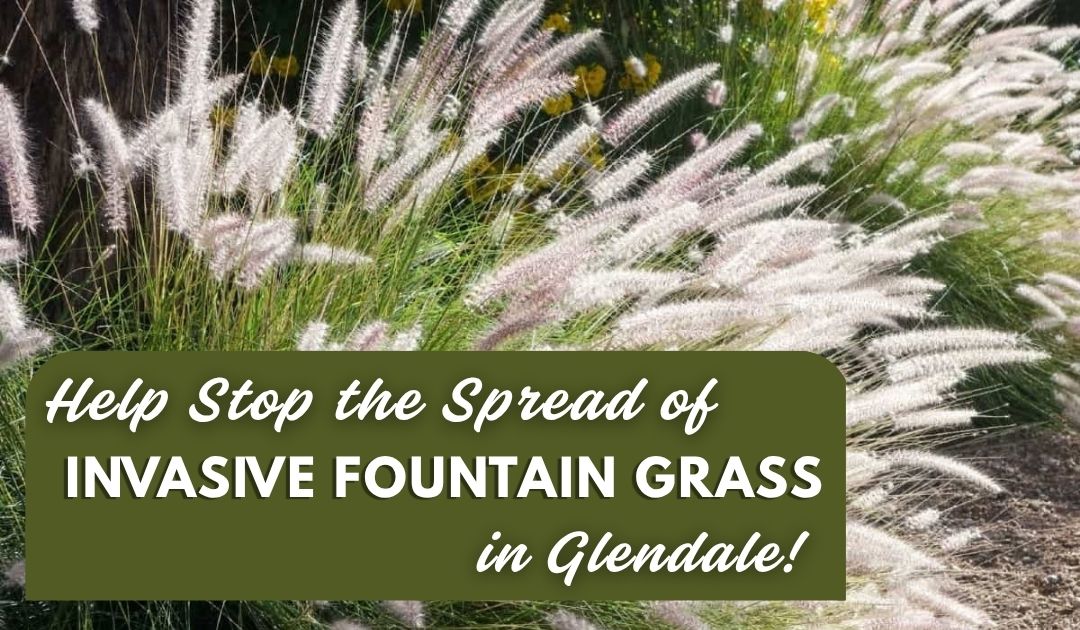
Fountain grass (Pennisetum setaceum), a bunch grass native to Africa, is one of the most common invasive species in Glendale, La Crescenta and in nearby communities. Local municipal and county public works agencies face a lot of work to get rid of it in tree wells and parkways. Arroyos & Foothills Conservancy members have been working tirelessly to remove it from local open spaces such as the Sunshine Preserve. I am obsessed and depressed by its growing presence and other Glendale Environmental Coalition folks agree that it is now spreading more widely. We think it is time to organize our members and residents to get rid of it in Glendale.
Here is an example which popped up recently in my next door neighbor’s parkway in Montrose.
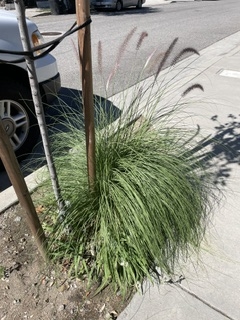
I am positive it was not there when I left to visit family on September 14th, but to my horror there it was after I got back on September 28th. It is brighter green than typical fountain grasses. Why? Though drought-tolerant it is happily slurping up the water provided for the adjacent street tree, a native Western Redbud planted by the city of Glendale.
This picture is a fountain grass specimen in another parkway just down my street. It gets no or very little water and is drying out in early fall but it is very much alive — it will survive our mild winter and will love El Niño rains! — and will continue to shed a gazillion seeds to sprout new plants.
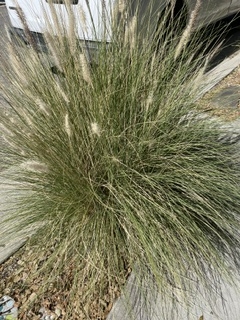
Along with being drought tolerant, Pennisetum setaceum survives very high heat, drying out early in summer. It is extremely flammable and ignites easily, contributing to wildfire danger. Its abundant seeds are very light and aerodynamic so that even light breezes spread them over many miles. Despite being a vigorous grower with little or no water, fountain grass has shallow roots so doesn’t stabilize our slopes as native plants do. It seems to have no natural predators, neither pests nor diseases, so it can quickly out-compete other plants. Unlike native flora fountain grass is not good habitat for our birds, butterflies, lizard and other local fauna.
GEC wants to educate more Glendalians about the numerous problems with fountain grass to inspire personal action. We hope to work with Glendale Water and Power and Crescenta Valley Water District to include informative inserts in utility bills. Work parties to remove these invasives, similar to our successful litter pickups, can be organized. I believe that having printed information can help us communicate more effectively with our neighbors to persuade them to remove fountain grass from their own properties and parkways.
– – – – – – – – – – – – – – – – – – – – –
READ MORE FROM THE CA NATIVE PLANT SOCIETY:
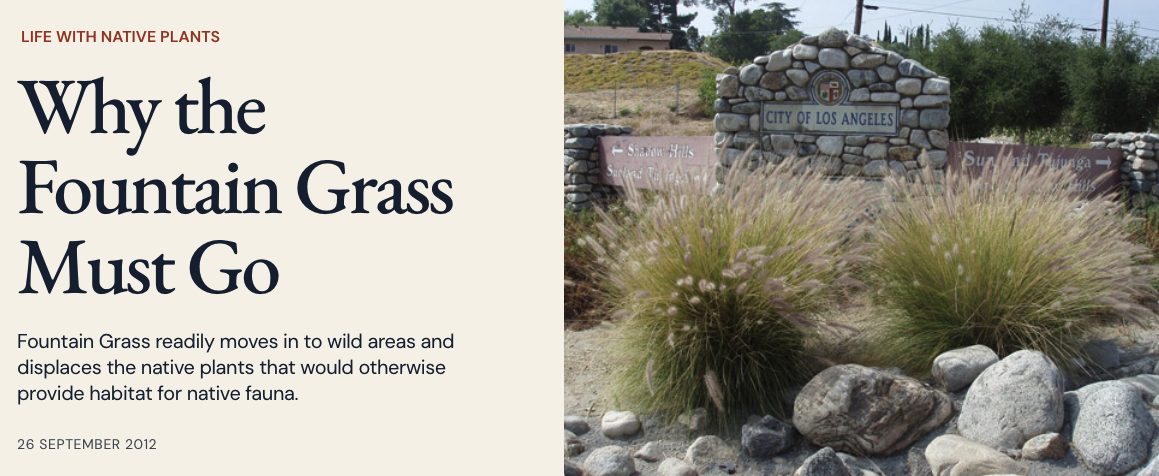 “The downside is that in California, Fountain Grass has no natural enemies and readily out-competes other plants. It is invasive, and if you plant it in your yard, you will soon have seedlings of Fountain Grass popping up wherever there is bare soil. It will even grow vigorously in the gaps between sections of concrete and bedrock of natural slopes. Its seeds are carried long distances in the wind, so if your neighbor has it in their yard, it will eventually end up in yours, and the nearby natural areas. If you are in a fire hazard area, it is especially dangerous, as it dries out early in the summer and becomes extremely flammable.”
Discover more from Glendale Environmental Coalition
Subscribe to get the latest posts sent to your email.